N°2

High-Efficiency Two-Way Horn Loudspeaker System


Designed for larger rooms, higher sound pressure levels, and confident control —
without compromise in imaging, dynamics, or composure.

The N°2 represents the consistent evolution of the N-Series concept:
a high-performance two-way horn loudspeaker system featuring a large mid/high-frequency horn and a carefully controlled low-frequency section, designed for realistic listening levels, stable directivity, and precise spatial reproduction in demanding listening environments.

Limited to five pairs per year —
because development, manufacturing, and final tuning require time.

LMH N°1 – monolithischer High-Efficiency Hornlautsprecher

System

2-way. Large-format mid/high-frequency horn (Ø ~500 mm). Concentric bass concept

Crossover

Approx. 700–800 Hz (model-dependent)

Efficiency

>96 dB /1W/1m

Operation

Aktive (bi-amped)

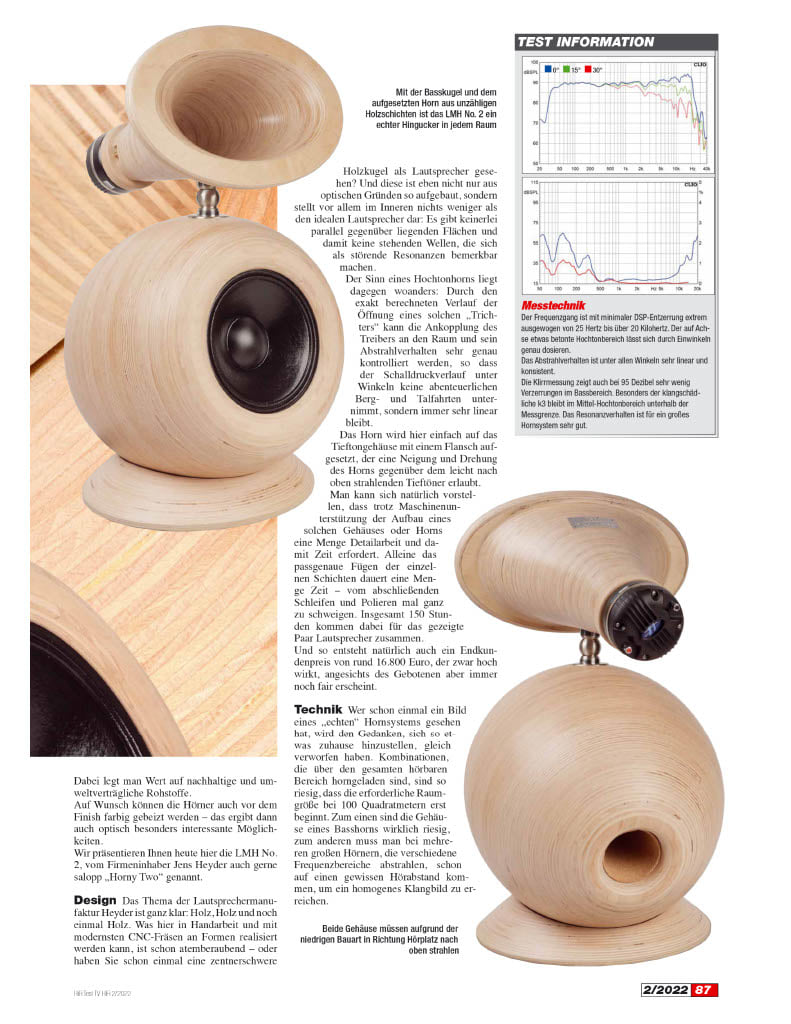
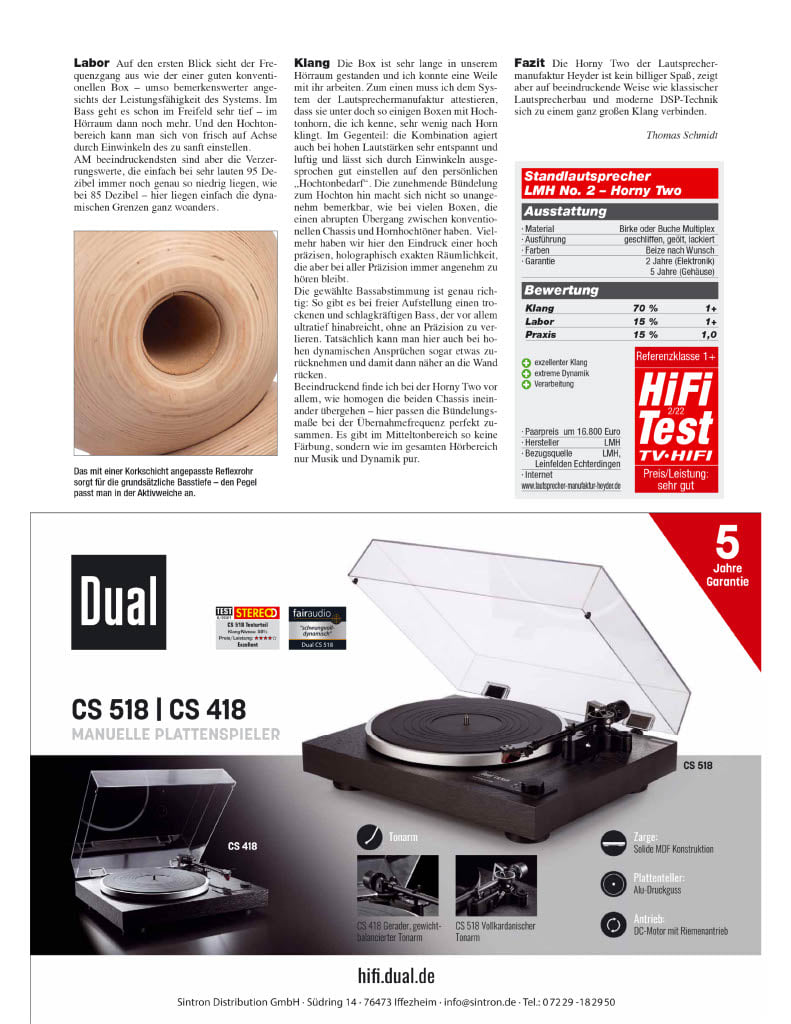
“Distortion remains just as low at 95 dB as it does at 85 dB — the dynamic limits lie elsewhere.”
HiFi-Test, 02/22

Concept


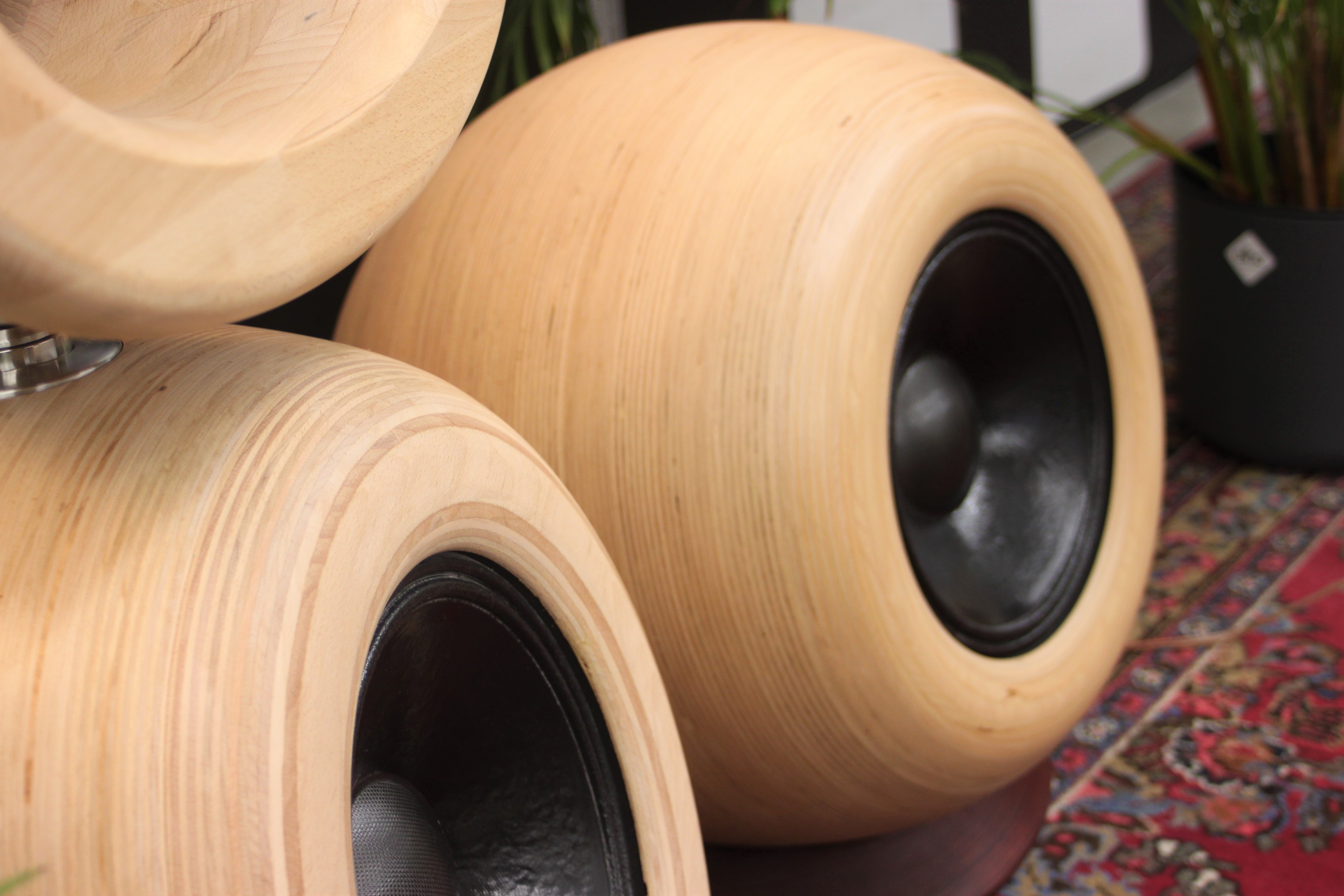
LMH N°1 – Seitenansicht, monolithische Gehäusestruktur

The N°2 is designed for applications requiring larger rooms, greater listening distances, and realistic sound pressure levels.
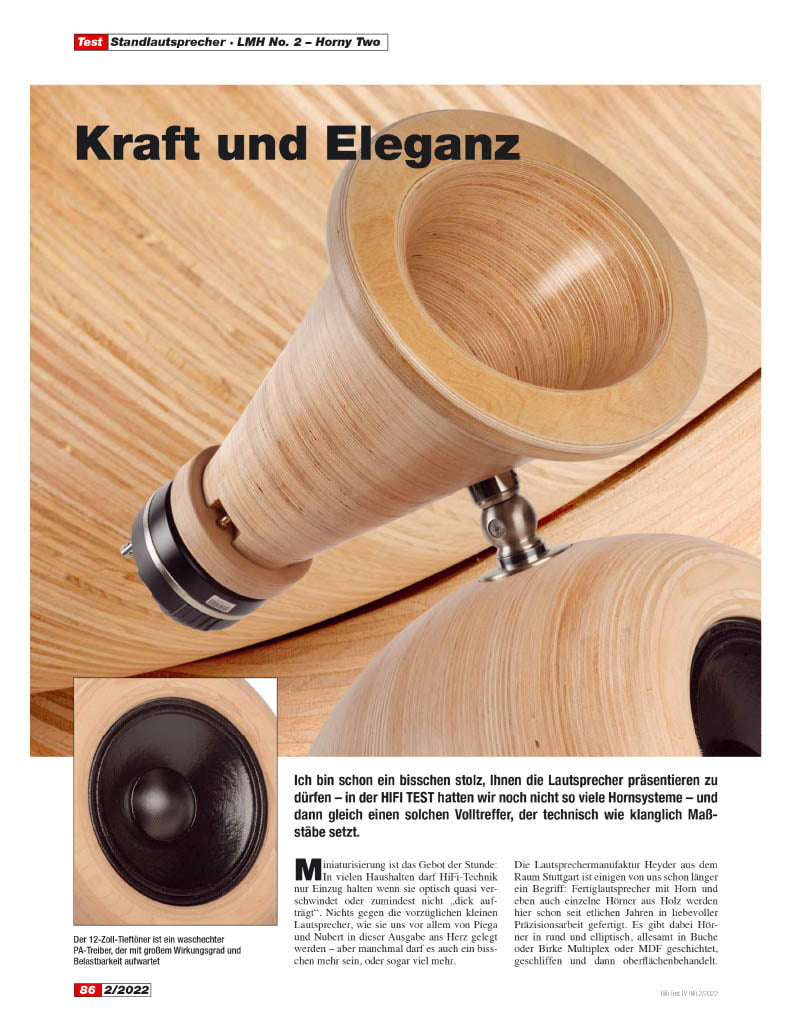
At its core is a large-format mid/high-frequency horn which, compared to more compact systems, provides more stable directivity, lower distortion, and a more even distribution of acoustic energy within the room.

Due to the larger horn mouth, the high-frequency driver operates under reduced acoustic load. This results in greater dynamic headroom, clean transient reproduction, and stable spatial imaging even at higher listening levels.

The low-frequency section is not conceived as an add-on, but as an integral part of the overall system. Enclosure volume, tuning, and crossover region are deliberately matched to the horn’s radiation behavior in order to achieve a homogeneous overall character without discontinuities between direct radiation and horn loading.

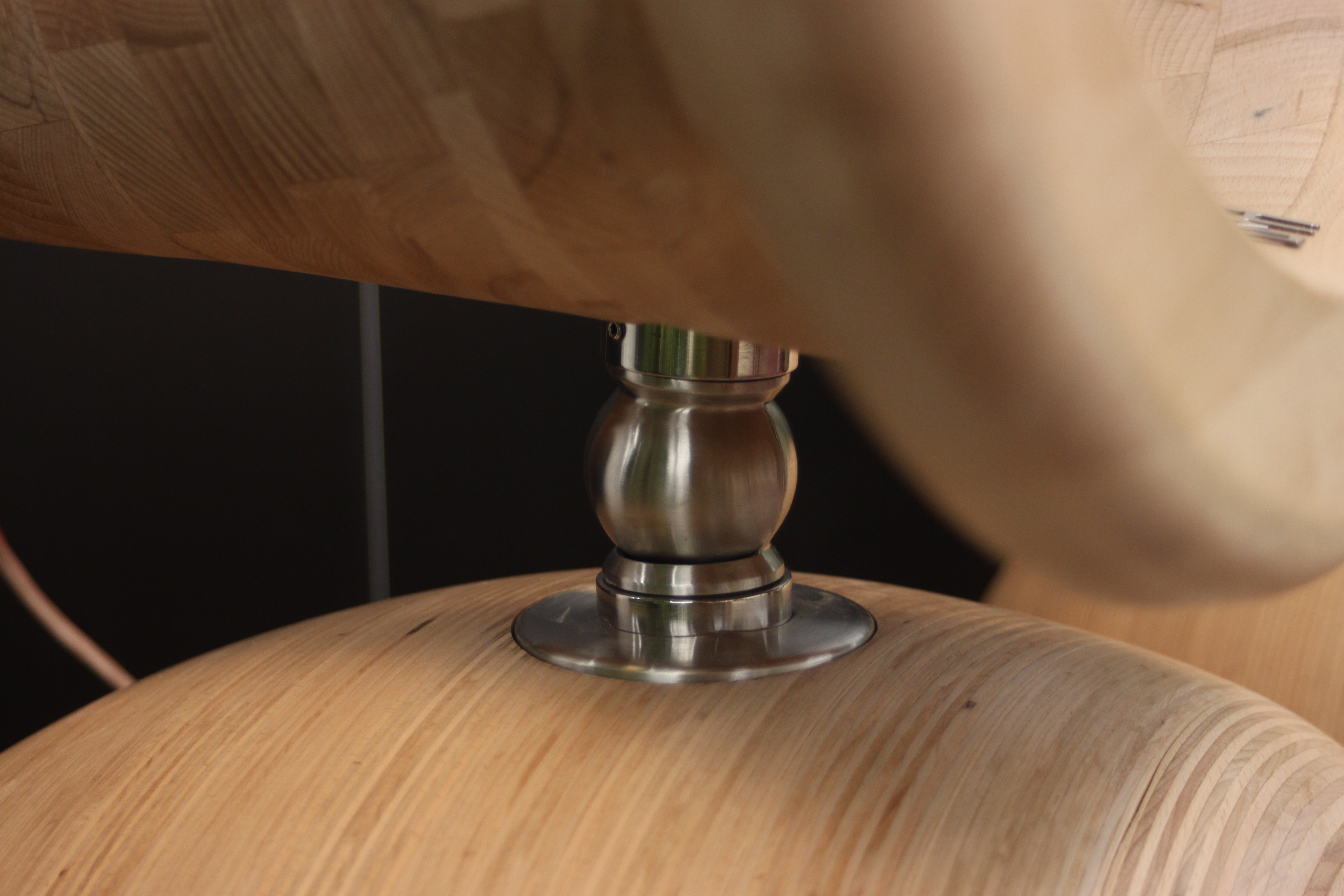
Like all models in the N-Series, the N°2 is understood as a mechanically stable, monolithic unit. Geometry, material selection, and acoustic design follow functional logic rather than aesthetic trends. The goal is a controlled, robust loudspeaker system that performs confidently under real-world conditions.

Editions

The N°2 is available in two horn-side configurations.
Both editions are based on the same fundamental acoustic design, but differ in horn geometry and radiation characteristics.


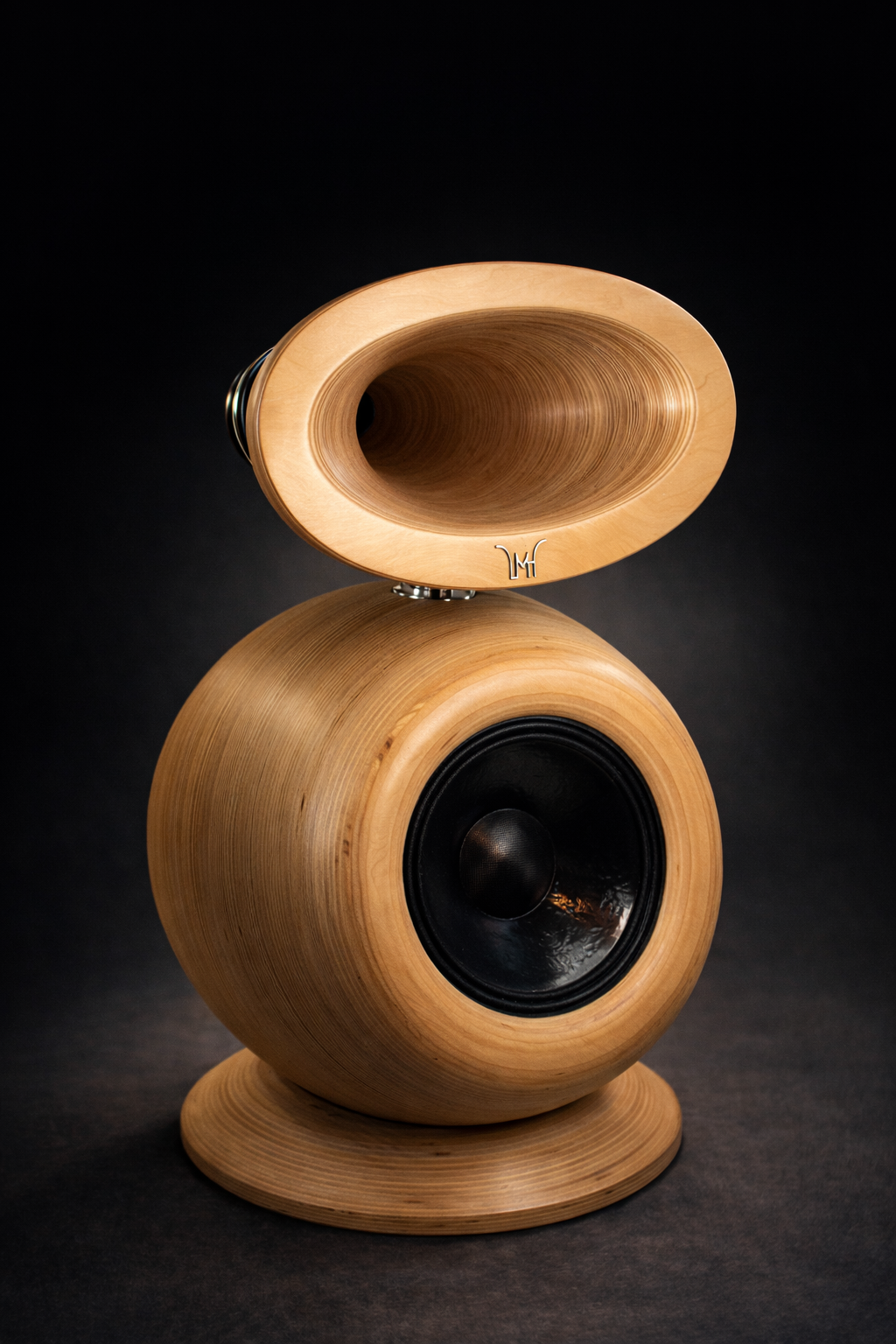
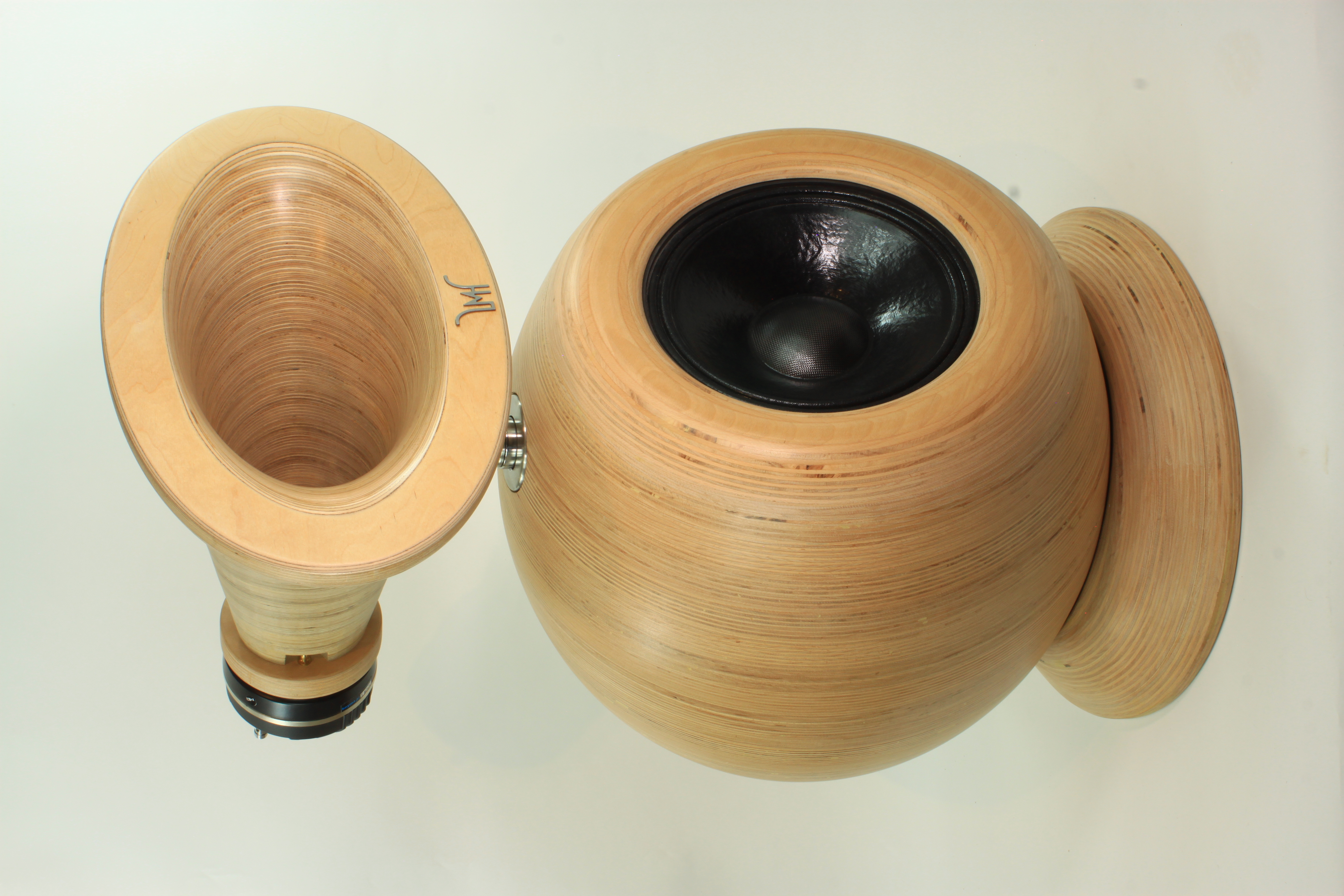
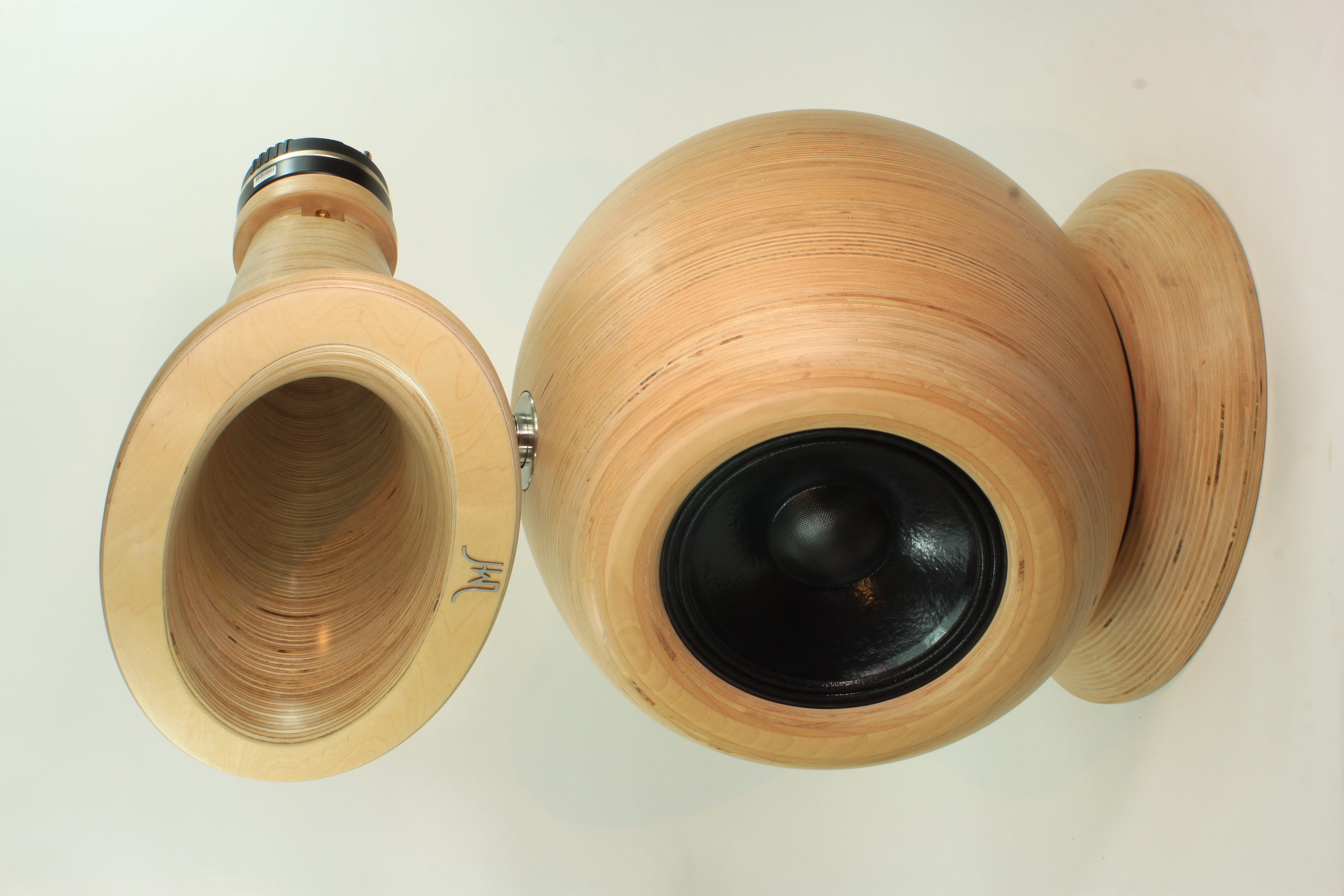
N°2 · eTrak (ET Edition)

Elliptical mid/high-frequency horn

  • Elliptical horn profile with defined directivity characteristics

  • Wider horizontal and more controlled vertical radiation

  • Reduced early room reflections

  • Advantageous for larger listening areas or acoustically demanding rooms

The eTrak edition is optimized for controlled directivity and consistent radiation behavior.

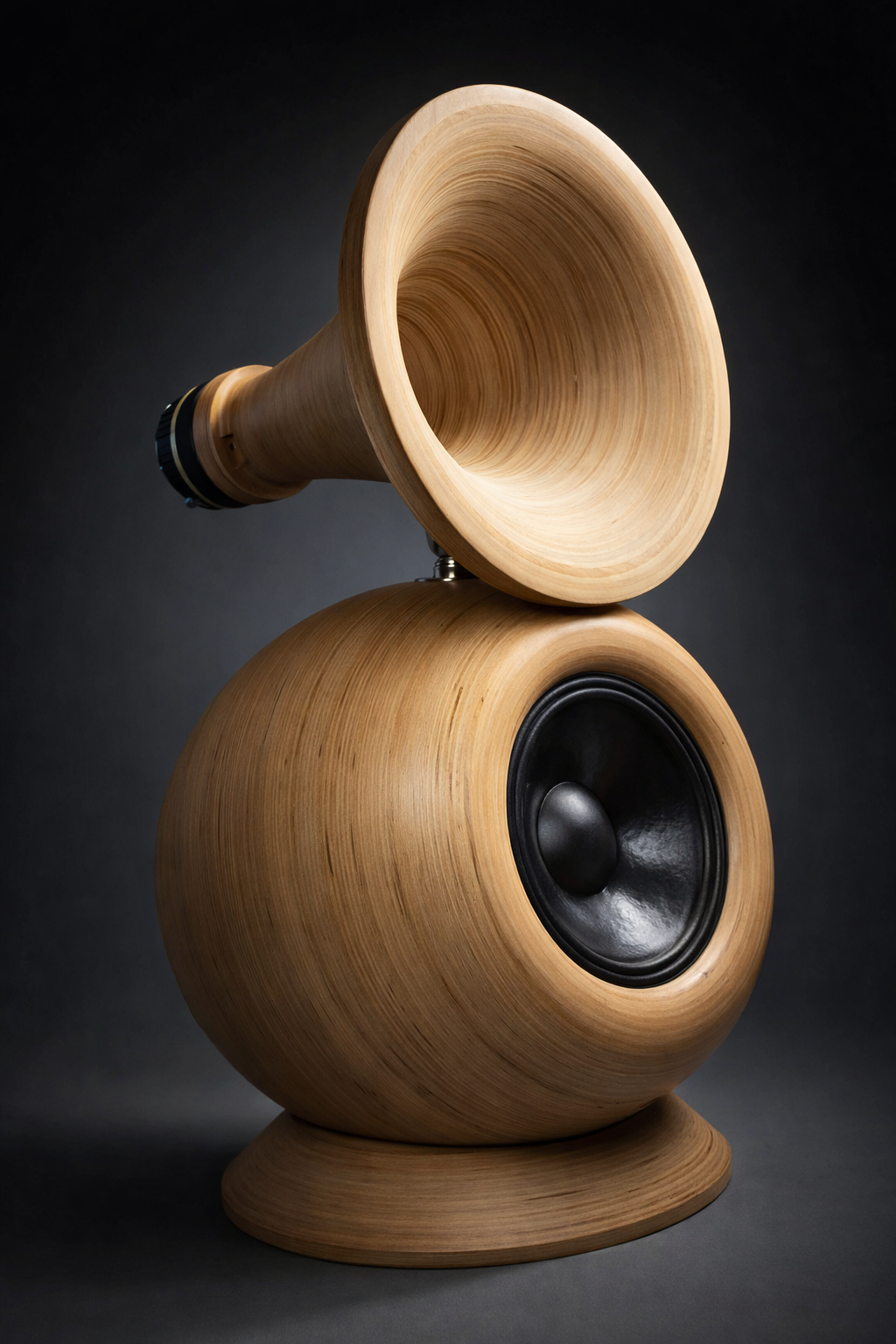
N°2 · sTrak (ST Edition)

Round mid/high-frequency horn

  • Round horn profile with rotationally symmetric geometry

  • Uniform radiation in both horizontal and vertical planes

  • Highly stable phantom center and precise localization

  • Particularly suited for classic stereo setups with symmetrical placement

The sTrak edition focuses on coherent imaging and homogeneous energy distribution within the room.

Shared Platform

Identical driver configuration

Same enclosure design and low-frequency tuning


Manufacturing & Materials


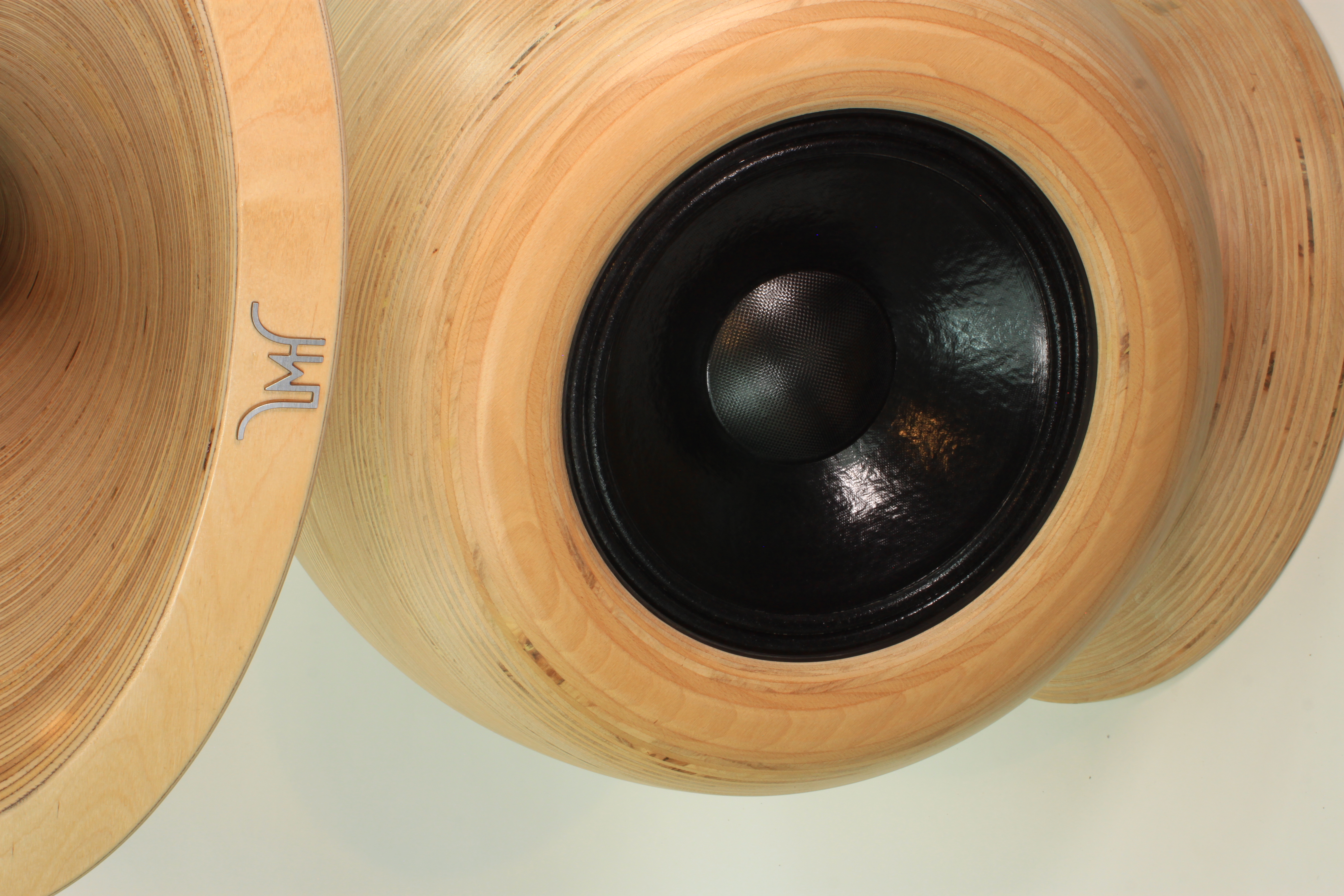
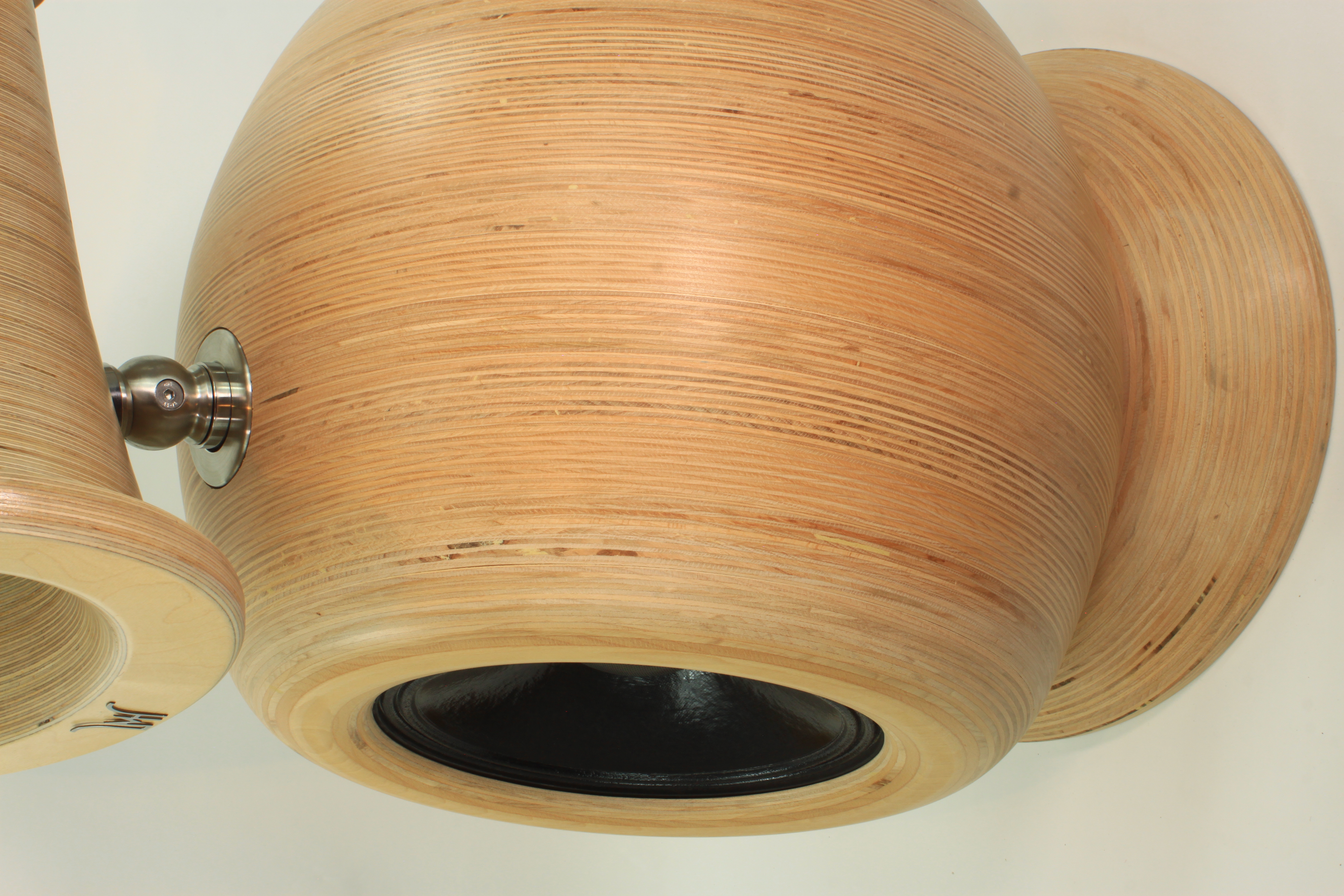
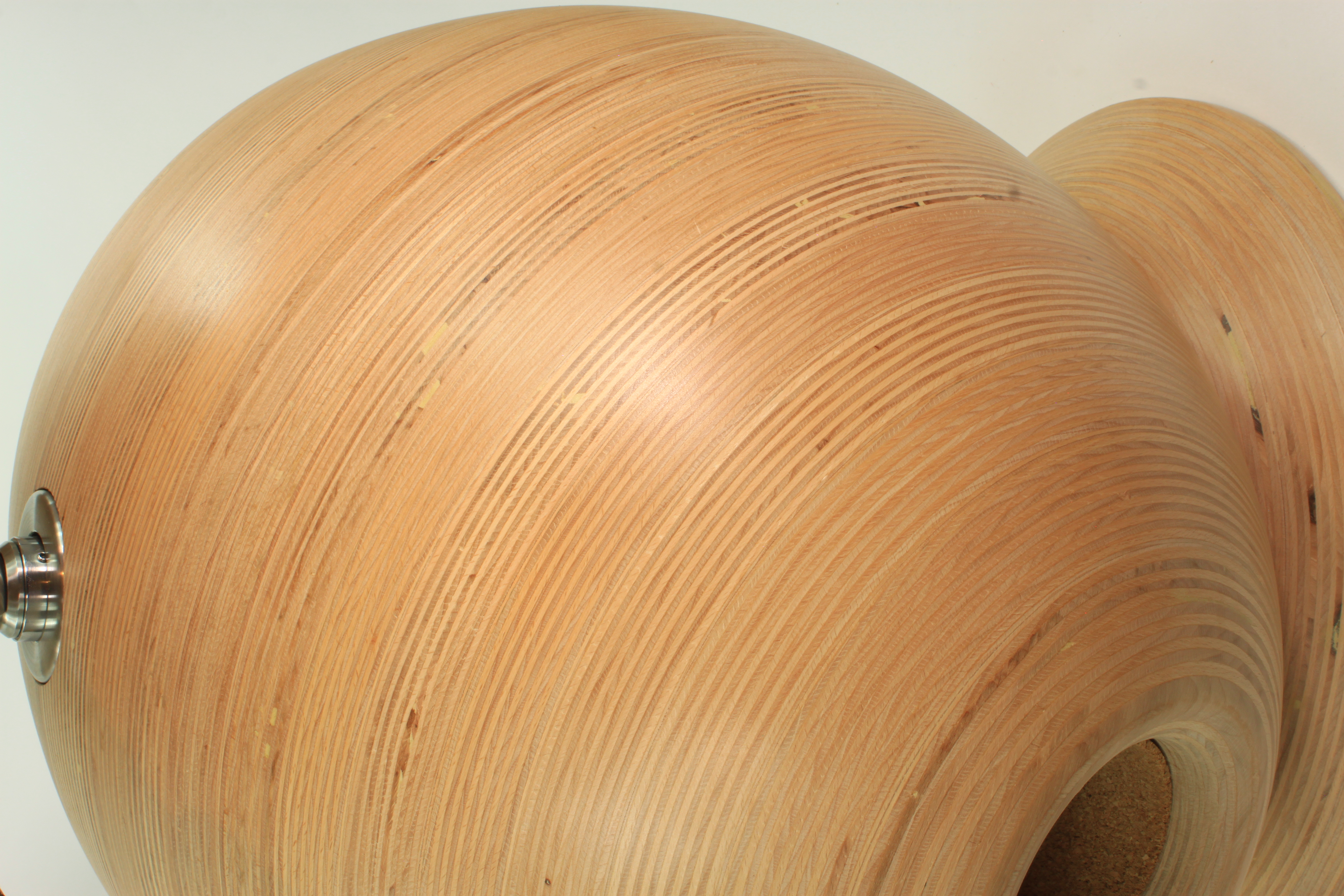
The N°2 is manufactured entirely in the LMH workshop.
Enclosures, horn components, and structural elements are produced using precise CNC machining and subsequently finished by hand.

The enclosure is built from solid wood-based materials with substantial wall thicknesses.
The construction is designed for mechanical stability and low self-resonance, providing a mechanically quiet operating environment for the drivers — even at high sound pressure levels.

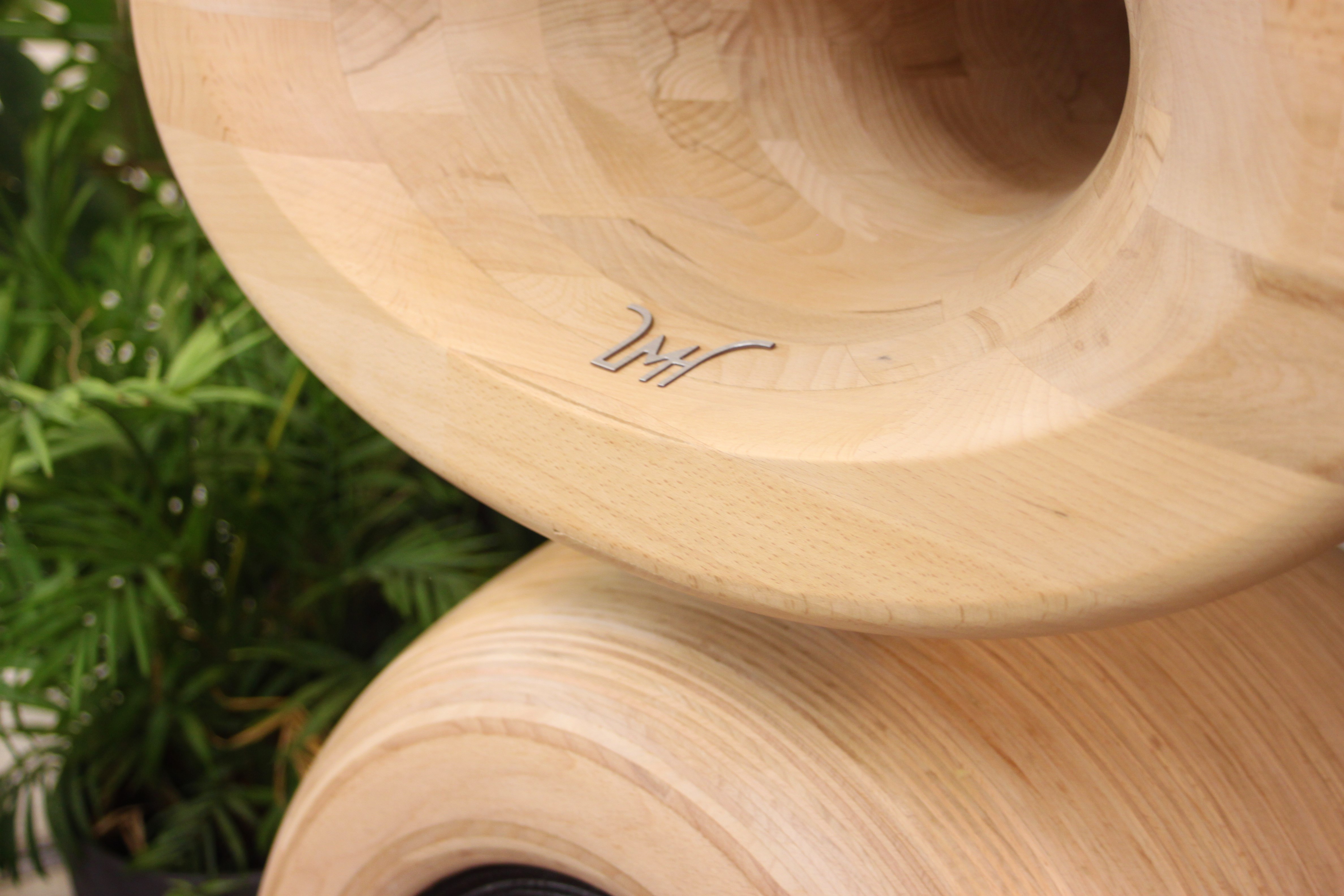
The mid/high-frequency horn is manufactured from wood and is deliberately not replaced by stiff, low-damping plastics or metals.
Due to its high internal damping, wood offers advantages in controlling structural resonances and supports a mechanically calm waveguide, particularly in the critical midrange.

Finishes, wood species, and detailing are defined on a project-specific basis.
The goal is not standardization, but a functionally and aesthetically coherent execution, matched to application and environment.

Technical Concept & Design Rationale

This section is intended for readers who wish to understand the acoustic concept of the N°1 in greater detail.


1. System Overview

The N°2 is a high-performance two-way horn loudspeaker system, developed for larger rooms, higher sound pressure levels, and realistic listening scenarios. It combines a refined acoustic architecture with a monolithic mechanical foundation to achieve controlled directivity, high dynamic capability, and stable spatial reproduction.

  • System type: Two-way horn / direct radiator

  • Large-format mid/high-frequency horn: Ø approx. 500 mm

  • Crossover region: approx. 700–800 Hz (model-/edition-dependent)

  • Sensitivity: >96 dB / 1 W / 1 m (system-dependent)

  • Operation: active (bi-amped recommended)

2. High-Frequency System & Horn Geometry

At the core of the N°2 is a large-format wooden horn for mid and high frequencies.
The larger horn mouth reduces the acoustic load on the driver, increases dynamic headroom, and stabilizes directivity well into the midrange.

  • 1.4″ compression driver with neodymium magnet system and a lightweight titanium-polymer diaphragm

  • Precisely CNC-machined wooden horn — energy-efficient, impulse-stable, with controlled radiation

  • Horn geometries depending on edition: sTrak (rotationally symmetric) or eTrak (elliptical)

Both editions share the same acoustic core design, differing only in their horizontal and vertical directivity characteristics.

3. Low-Frequency System

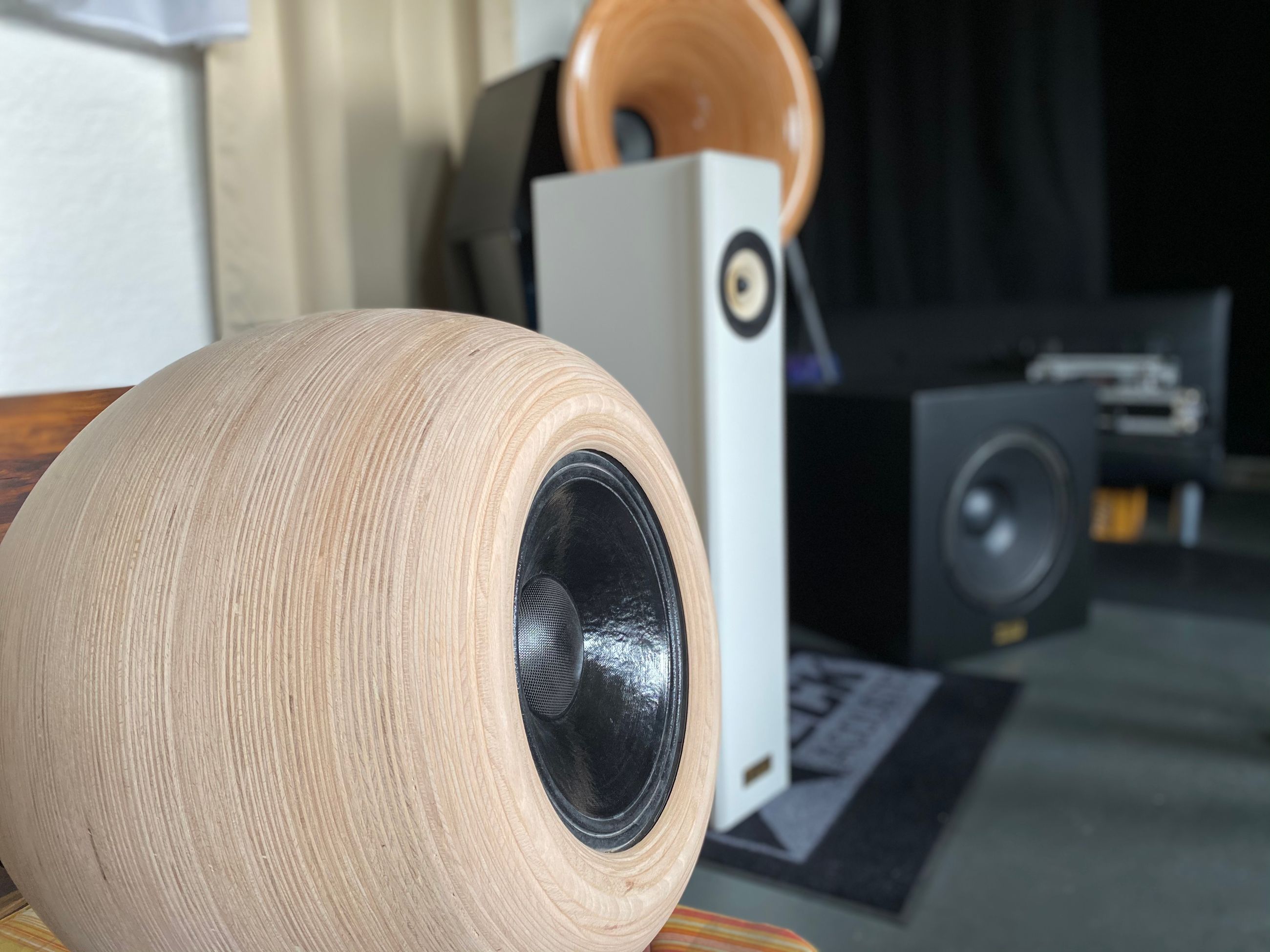
The low-frequency section of the N°2 is not an add-on, but an integral part of the overall system. An LMH Concentric-B bass reflex system provides precise, homogeneous low-frequency energy and a uniform coupling to the room.

  • 1× 12″ low-frequency driver in a symmetrical enclosure structure

  • Central port minimizes airflow artifacts and resonances

  • Acoustically matched to the large-format horn for coherent transitions

4. Crossover Region & Directivity

The crossover region between the low-frequency section and the horn is set at approximately 700–800 Hz and is chosen to keep phase behavior, directivity, and energy transfer stable.
The size of the horn allows for a dynamically relaxed crossover region, contributing to uniform radiation and stable spatial localization.

5. Operating mode & DSP fine tuning

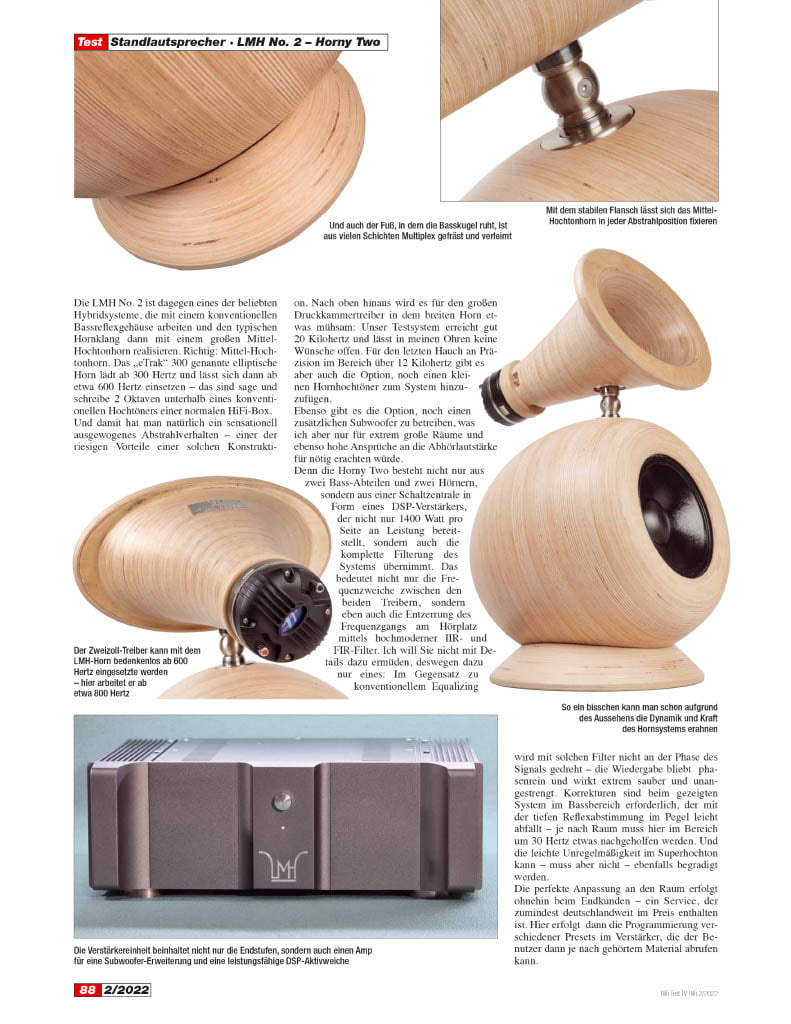
For the N°2, an active (bi-amped) operating mode is recommended, as it provides the most precise control over crossover behavior, time alignment, and level matching.
A DSP-based crossover allows for project-specific adaptation to room conditions and listening distance.

6. Measurement & tuning

Measurements for the N°2 serve technical verification, not self-promotion.

Depending on the project, this may include:

  • frequency response (on-axis / off-axis)

  • impedance behavior

  • distortion characteristics

  • crossover behavior and directivity

Measurement data can be provided on a project-specific basis.
Final tuning is always carried out with the entire system and the listening room in mind.


7. Data & Dimensions

System

  • Design principle: Two-way horn / direct radiator

  • Radiation pattern: controlled, edition-dependent (sTrak / eTrak)

  • Operation: active (bi-amped recommended)


Drivers & acoustics

  • High-frequency: 1.4″ compression driver, wooden horn Ø approx. 500 mm

  • Low-frequency: 1× 12″ woofer, Concentric-B bass reflex system


Electrical data

  • Sensitivity: >96 dB / 1 W / 1 m (system-dependent)

  • Nominal impedance: 8 Ω (project-dependent)

  • Recommended amplifier power: from approx. 5–10 W suitable for meaningful operation


Dimensions & weight (approx.)

  • Height: ~120–130 cm

  • Width: ~60 cm

  • Depth: ~62 cm

  • Weight: ~60–70 kg per loudspeaker

8. Surfaces & Finish Philosophy

The N°2 is structurally designed as a larger and more mechanically dominant system than the N°1.
Accordingly, material selection and surface finishes are not decorative elements, but integral parts of the structural and acoustic design.

The enclosure is based on a dimensionally stable core of beech plywood (multiplex), deliberately chosen for its high dimensional accuracy, uniform density, and excellent acoustic properties.

Surface treatment and finish of the N°2 are functionally motivated, not decorative. They complement the acoustic and mechanical design of the loudspeaker.


Hardwax oil (standard)

  • Open, natural surface — technically uncritical

  • Emphasizes grain, volume, and material character

  • Acoustically neutral, durable, and reworkable


Clear lacquer (optional)

  • Satin-matte, technically calm protective layer

  • Increases mechanical robustness without acoustic influence


Stain & color options (optional)

  • Transparent stains highlight the wood structure

  • Colored oil or lacquer accents available on a project-specific basis

  • Selection in context of room, lighting, and overall system character


Material & construction logic of the N°2

  • Beech plywood: permanently stable, low-resonance, reproducible

  • Surface selection based on application and target character

No foils.
No simulated veneers.
No industrial surface make-up.

Pricing

  • N°2 · sTrak (ST Edition) — from €14,900 per pair

  • N°2 · eTrak (ET Edition) — from €16,900 per pair

Pricing depends on configuration, edition, wood selection, and technical setup.

Inquiry & Configuration

Each N°2 is built on a project-specific basis.
Following your inquiry, we discuss configuration, finishes, and technical options and provide a non-binding quotation.

Securely packaged and shipped worldwide.


© 2026 LMH.